
Tag Archives: John the Baptist

Matthew 11:2-11 Careful, You’re Wishing Your Life Away

Matthew 11:2-11  Careful, You’re Wishing Your Life Away

December 15, 2013 – Caitlin Trussell

Augustana Lutheran Church, Denver, CO
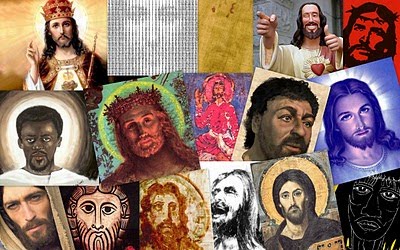
 

Matthew 11:2-6  When John heard in prison what the Messiah was doing, he sent word by his disciples 3 and said to him, “Are you the one who is to come, or are we to wait for another?” 4 Jesus answered them, “Go and tell John what you hear and see: 5 the blind receive their sight, the lame walk, the lepers are cleansed, the deaf hear, the dead are raised, and the poor have good news brought to them. 6 And blessed is anyone who takes no offense at me.” 7 As they went away, Jesus began to speak to the crowds about John: “What did you go out into the wilderness to look at? A reed shaken by the wind? 8 What then did you go out to see? Someone dressed in soft robes? Look, those who wear soft robes are in royal palaces. 9 What then did you go out to see? A prophet? Yes, I tell you, and more than a prophet. 10 This is the one about whom it is written, “See, I am sending my messenger ahead of you, who will prepare your way before you.’ 11 Truly I tell you, among those born of women no one has arisen greater than John the Baptist; yet the least in the kingdom of heaven is greater than he.



My stepfather was always good for a pithy word of wisdom.  Responding to my teenage panic when I forgot to tip the waitress my first time into a restaurant on my own, Pops said, “You don’t get rich by tipping cheap.”  Or time and again when I was just about jumping out of my skin about something exciting on the calendar and would say things like, “I wish it were Saturday already,” Pops would say, “Careful, you’re wishing your life away.”  It’s that one especially that still catches me.  The whole thing about staying in the day, knowing full well there is something amazing ahead on the calendar.  “Careful, you’re wishing your life away.”

Christmas can be like that kind of waiting.  When you’re four, waiting to open that enormous box under the tree can feel like a lifetime.  When you’re fourteen, waiting to open what looks like it could be the new PlayStation4.  When you’re twenty-four, waiting to hear back about that job interview or whether you’ve been accepted to that graduate program.  When you’re sixty-four, waiting for your daughter’s flight to land or for the grandkids to show up for Christmas dinner.  When you’re ninety-four, waiting to be picked up for that dinner that includes four or five generations under one roof.  The things we wait for change but there is always waiting.

Some of us are better at waiting than others.  But, for most people, waiting often inspires curiosity.  What will whatever we’re waiting for actually be like?  John the Baptist’s question comes out of this kind of curiosity.  John sends his disciples to ask Jesus, “Are you the one who is to come, or are we to wait for another?”  And, typical of Jesus, he doesn’t actually answer the question.  He tells them to report back to John what they hear and see.  Although it’s funny that he tells them to report their observations and then he tells them what to say.  Regardless, Jesus responds to John’s question without really answering it.  Leaving John to wonder about the information he receives in light of the question he asked, “Is Jesus the Messiah?”

It’s a great question.  Many people at that time were awaiting the Messiah.  At the turn of the first century there were many people claiming to be the Messiah.  It was a confusing time, differently so than today.  Today, I don’t hear a lot of people wondering about Messiahs.  But I do hear people waiting.  People are looking and waiting for leaders to emerge as is evident in the Presidential elections.  People are looking and waiting for wins as the Broncos sew-up their regular season play and head toward the play-offs.  People are looking and waiting for a lot of things, good things, fine things, even fun things.  But are they looking and waiting for a Messiah?  A Savior?  The evidence would suggest not.

So the move we make in Advent as a church is a big one.  The move into preparation and waiting is not only to celebrate a birthday from long ago.  The people who are the church look toward a future with hope because there is a Messiah.  This promise is massively and widely counter-cultural.  This promise involves some Advent waiting.

Waiting in which some of us in the pews wonder if any of this even makes a difference?  Or wondering if Jesus is who he says he is?  Or who any faithful saint says Jesus is?  However, waiting is not a vacuum.  Waiting is time we don’t wish away.  Revealed in the waiting is need.  This may be some of what Jesus is getting at in his answer to John’s disciples.  There is real need that needs real solutions.  Jesus names hunger, illness, death, and poverty.  We can add to this list quickly by naming violence against family, friend, and neighbor that comes in many forms – gossip, slander, physical abuse, murder.

I would also add to the list the way we are prone to elevate and highlight certain kinds of dramatic violence as grief-worthy while relegating the daily violence that is happening in some people’s lives and communities to normalcy.  Our rapt attention to the spikes of violence deemed newsworthy and our failure to engage in the problem of daily violence that we’ve deemed normal violates our common humanity.  Deeming certain kinds of violence as normal adds, not insult to injury, but injury to injury.  In this way, we are not innocent bystanders.

The problems that Jesus names and the problems we add to the list are relational.  In the relational language of scripture we call each other neighbors; in the language of humanity we simply call each other people.  As people we are capable of fatally wounding each other in mind, body, and spirit…as people, the stark reality of our willingness to hurt each other, and our ignorance in even seeing that we hurt each other, makes obvious that we deeply need a Savior – a Savior who illuminates these stark realities and frees us into them to help our neighbor as well as being helped by them.  Some of us are made ready to do the hard work necessary to meet real needs and some of us are in the sometimes more difficult reality of asking for and receiving help when we have need.  Whichever end of the giving and receiving you find yourself, there is more to consider in this text.  This isn’t simply about helping each other and our neighbor out in the name of Jesus.

This is about being saved by the Messiah who reveals our need by calling us out on the way we damage each other and ourselves.  We, who are saint and sinner at the same time, are drawn to faith by the One who forgives us for the hurt we dole out and stands with us while we take on the consequences.  It is this one, this Messiah, who the kids in Simply Christmas point us toward this morning even as we still wonder if we’re really in need.  Only to hear that, yes, we are in need and cannot save ourselves.  But the one who is, who was, and who is to come, is the Savior.  A Savior worth the wait – a Savior for all of us, a Savior for you.


Luke 3:7-18 “God’s Righteous Wrath Rocks On”

Luke 3:7-18 “God’s Righteous Wrath Rocks On”

December 16, 2012 – Caitlin Trussell

Lutheran Church of the Master, Lakewood, CO

Luke 3:7-18   John said to the crowds that came out to be baptized by him, “You brood of vipers! Who warned you to flee from the wrath to come? 8 Bear fruits worthy of repentance. Do not begin to say to yourselves, “We have Abraham as our ancestor'; for I tell you, God is able from these stones to raise up children to Abraham. 9 Even now the ax is lying at the root of the trees; every tree therefore that does not bear good fruit is cut down and thrown into the fire.” 10 And the crowds asked him, “What then should we do?” 11 In reply he said to them, “Whoever has two coats must share with anyone who has none; and whoever has food must do likewise.” 12 Even tax collectors came to be baptized, and they asked him, “Teacher, what should we do?” 13 He said to them, “Collect no more than the amount prescribed for you.” 14 Soldiers also asked him, “And we, what should we do?” He said to them, “Do not extort money from anyone by threats or false accusation, and be satisfied with your wages.”
15 As the people were filled with expectation, and all were questioning in their hearts concerning John, whether he might be the Messiah, 16 John answered all of them by saying, “I baptize you with water; but one who is more powerful than I is coming; I am not worthy to untie the thong of his sandals. He will baptize you with the Holy Spirit and fire. 17 His winnowing fork is in his hand, to clear his threshing floor and to gather the wheat into his granary; but the chaff he will burn with unquenchable fire.” 18 So, with many other exhortations, he proclaimed the good news to the people.


I’m going to skip right over the question about how many of you even knew there was a prophet named Zephaniah and whether or not you knew there is a book in the Bible with his name on it.  Not one of our more commonly referenced prophets, the book is only three chapters long and filled with fierce, angry, wrath of God type stuff.  Somewhere along the way, this God who gets angry fell out of favor and not often discussed.  Because really, who’s in favor of being on the receiving end of anyone’s anger, much less God’s? [1]

So this brings me to a question – one that you could answer easily, unlike the Zephaniah Bible quiz.  Have you ever had someone stand beside you and get angry on your behalf?  You’ve been down and out through no fault of your own or cheated or bullied and someone stands with you railing against the injustice of it all.  Your friend is angry for you and maybe even with you.  Well, this is a small scale way of appreciating the wrath of God message of the prophets – an historic tradition of people who call attention to injustices perpetrated by people against each other and against God.  There is a temptation we need to be careful to avoid as we compare our friend’s righteous anger and God’s righteous anger.  The temptation is that we often view ourselves on the side of God over and against whatever is happening that we may dislike – as opposed to standing apart from God along with everyone else.

I, for one, want a God who gets angry – a God who gets angry about the horror in Newtown, Connecticut rather than being absent or apathetic.  Because a God who died on a cross is there in these crises.  Where else would God be but with those who are suffering and dying at the hands of an evil act?  And now, likewise, with those who are suffering and grieving in its aftermath.  A God who gets angry shows up in defiant compassion and righteous truth.

Zephaniah’s words of hope come at the very end of a two and a half chapter prophetic rant.  And it includes a beautiful promise about God.  Zephaniah says, “He will renew you in his love.” Hear this again, please… “He will renew you in his love.”  How easy would it be view this promise through the soft, filtered light of a dewy, spring morning?  Too easy, if you ask me.   Too quickly, we are inclined to move to a sentimental notion of renewal that leaves the power of God dull and lifeless in our own minds.  And has us saying things like, “I’m not sure I like that Old Testament God.”  Or, “The Old Testament God came out for war and the New Testament God came out for a game of golf.”  In the desire to distance ourselves from the anger, we disconnect God’s story into two distinct pieces rather than appreciating the continuity of  God from the Hebrew Scriptures into the good news of the Gospel.  And sometimes I wonder if we’re not leaving out the better part.

Well, John the Baptist didn’t get the memo.  Listen to him! “You brood of vipers! Who warned you to flee from the wrath that is to come?”  John’s words reveal him to be part of the continuity between what happened as described by the prophets of old and what is happening now to the crowds who are swarming out to meet him.[2]  Although, after John’s greeting, I would guess that a few of them were wondering why they made the trip.

But John gives more than accusation and threat.  He says to them, “Bear fruits worthy of repentance.” It is good to pause here to remember all that is embedded in repentance.  Repentance assumes that God’s mercy is available.  Repentance assumes that God’s grace will come.  Repentance then also assumes our need for both of those things.  What good is repentance if God is not merciful?  What good is repentance if God’s grace is unpredictable and easily or capriciously withheld?

Another way to think about repentance is through this lens of being renewed in God’s love, being revealed in all that we are in the fullness of the good, the bad and the ugly.  The crowd, tax collectors and soldiers ask, “What then should we do?”  The crowd is apparently hanging onto more than they need, the tax collectors are collecting for Rome but lining their own pockets by overcharging, and the soldiers of the time are bullies, extorting money from the people.  In short, John tells them to share, play fair, and be kind.  This is not rocket science.  This is renewal that stands you with your neighbor rather than against them.

We can so easily stand apart from the crowd, the tax collectors, and the soldiers, feeling grateful that those aren’t our particular sins.  However, I see us smack in the middle of this crowd wondering why we came in today only to hear John’s words push against us, too.  After all, it’s difficult to fully celebrate the arrival of a savior if you don’t see much need for one from the start.

But then John lobs out a power-filled promise of God’s renewal and I’m left breathing deeply and overflowing with hope:

“16 John answered them all by saying, “I baptize you with water; but one who is more powerful than I is coming; I am not worthy to untie the thong of his sandals. He will baptize you with the Holy Spirit and fire. 17 His winnowing fork is in his hand, to clear his threshing floor and to gather the wheat into his granary; but the chaff he will burn with unquenchable fire.” 18 So, with many other exhortations, he proclaimed the good news to the people.”

The power of Pentecost is on fire just under the surface of this Advent text.[3]  The Holy Spirit, at work in Mary’s pregnancy, has more in mind than the gentle quiet of a nativity scene.  The Holy Spirit has us in mind, my friends.

John’s proclamation that “the one who is coming…will baptize you with fire and the Holy Spirit,” is indeed good news.  One of the ways John’s words help us today is by working us toward an understanding of this wild promise.   This begins with the distinction he makes between the wheat and chaff.  I see each of us here today as one of those grains – a grain sitting all warm and cozy within the chaff that surrounds it.  We get used to our chaff.  Some might even argue that we’ve made peace too easily with our chaff, our sinful selves.  But part of the promise is that our repentance, our surrender to the one who has the power to renew us, is that the sin gets called out in truth, gets forgiven and gets worked with.  And once that happens, look out!  This kind of renewal is more than a spa day – it is a salvation day in the here and now.

There are all kinds of ways God’s renewal in God’s love by the power of the Holy Spirit looks in people’s lives.  It can look utterly dramatic on the outside – like the woman with whom I’ve worshiped who killed her lover’s wife and has been incarcerated in Denver Women’s Correctional Facility for the past 20 years.  This woman sits in a Bible Study about the 10 commandments and confesses to breaking all of them.  She has a powerful ministry within the walls, reaching out in faith to other offenders –taking responsibility for her crime and living with the consequence as she sings of Christ’s freedom at Friday evening worship.  Renewal for her is being freed into a new future; one not defined by her past or the perception of those around her or even her location.

God’s renewal in God’s love by the power of the Holy Spirit can also look more subtle.  It can look like people who rage, gossip, gloat, hoard, cheat and bully, in both clever and unaware ways, and those same people walking up to bread and wine, surrendering to the Holy Spirit’s power to renew us in forgiveness and hope.   In short, it looks like people in need of a Savior, people who may or may not see or understand this need, and who celebrate his birth.

We are a people who need a Savior and who, very soon, will celebrate our Savior’s arrival.  Because we do not have a God who uses power to do us harm out of anger.  Rather, we have a God who, by the power of the Holy Spirit, came among us in skin and solidarity under star and comes among us now in Word, water, bread and wine – forgiving us and refining us by the power of the same Spirit.  We are prepared to receive our Savior in this Advent time by “the one who is and who was and who is to come.”[4]

Amen and Hallelujah!


[1] Abram Heschel, “The Meaning and Mystery of Wrath” in The Prophets (New York: Harper &Row, 1962), 358-382.

[2] Rolf Jacobson, WorkingPreacher.com, “Sermon Brainwave #267 – Lectionary Texts for December 16, 2012.”

[3] Karoline Lewis, WorkingPreacher.com, “Sermon Brainwave #267 – Lectionary Texts for December 16, 2012.”

[4] Revelation 1:8