Tag Archives: Jesus

Reverend Doctor King (Yes, Both Titles are Key) John 1:29-42 and Psalm 40:1-10

Caitlin Trussell with Augustana Lutheran Church on January 15, 2023

[sermon begins after the Bible story; Psalm 40 is at the end of the sermon]

John 1:29-42 [John the Baptist] saw Jesus coming toward him and declared, “Here is the Lamb of God who takes away the sin of the world!30This is he of whom I said, ‘After me comes a man who ranks ahead of me because he was before me.’ 31I myself did not know him; but I came baptizing with water for this reason, that he might be revealed to Israel.” 32And John testified, “I saw the Spirit descending from heaven like a dove, and it remained on him. 33I myself did not know him, but the one who sent me to baptize with water said to me, ‘He on whom you see the Spirit descend and remain is the one who baptizes with the Holy Spirit.’ 34And I myself have seen and have testified that this is the Son of God.”
35The next day John again was standing with two of his disciples, 36and as he watched Jesus walk by, he exclaimed, “Look, here is the Lamb of God!” 37The two disciples heard him say this, and they followed Jesus. 38When Jesus turned and saw them following, he said to them, “What are you looking for?” They said to him, “Rabbi” (which translated means Teacher), “where are you staying?” 39He said to them, “Come and see.” They came and saw where he was staying, and they remained with him that day. It was about four o’clock in the afternoon. 40One of the two who heard John speak and followed him was Andrew, Simon Peter’s brother. 41He first found his brother Simon and said to him, “We have found the Messiah” (which is translated Anointed). 42He brought Simon to Jesus, who looked at him and said, “You are Simon son of John. You are to be called Cephas” (which is translated Peter).

[sermon begins]

Oh, to be a preacher like John the Baptist. Things happened fast around him. Hanging out with two of his disciples, he watched Jesus walk by and said, “Look, here is the Lamb of God!” Those two instantaneously took off after Jesus. I wonder when he noticed that he was being followed. Jesus turned and saw them following and asked John’s disciples what they were looking for and they answered, “Rabbi, where are you staying?” At this point in the story, Jesus has been called three names – Lamb of God, Son of God, and Rabbi. In a few more verses, Andrew will call him Messiah. And we’re only in the first chapter of John’s Gospel! The gospel writer is clear in the opening verses of the Prologue that Jesus is preexistent and one with God[1] when he wrote, “In the beginning was the Word, and the Word was with God, and the Word was God…and the Word became flesh and lived among us…No one has ever seen God, it is God the only Son, who is close to the Father’s heart, who has made him known.”[2]

Apparently, Jesus’ preexistence and oneness with God needed clarification. In our brief reading, the Spirit of God descended from heaven and remained on Jesus. In the meantime, he was given four titles – Lamb of God, Son of God, Rabbi, and Messiah. These four titles reflect what Jesus does. As Lamb of God, he bridges the distance between us and God that is described as the sin (singular) of the world – God intervenes in the world on behalf of God’s people.[3] As Son of God, Jesus is the incarnation, the word made flesh who makes God known. The implication is that as Jesus does, God would do. We glimpse God through the life and ministry of Jesus. As Rabbi, Jesus is a teacher. When the disciples call him Rabbi, it’s Jewish shorthand for their desire to learn from him.[4] When Jesus says, “Come and see,” he’s inviting them to learn from his words and participate in his ministry, embodying his teaching in the world around them. As Messiah, Jesus is identified as the one to fulfill Jewish messianic hope as an heir of King David.[5]

One striking part of this story is that none of Jesus’ titles make him unapproachable. They only make him more compelling for the disciples to follow, to participate in what Jesus is doing in the world. I’ve wondered if this is because the titles consolidate God’s power and promise into Jesus in the way of freedom. God shows up to draw people closer, to love them, and to acknowledge them as his children. If you haven’t had a chance to listen to Pastor Ann preach last week, go back and give it a listen.[6] She asked us to imagine how we might live in the world if our baptismal identity as Child of God was the center point in our lives, much as it was for Jesus when God called him “Beloved” at his baptism. “Being grounded in God’s love moved and sustained all of the ministry that followed, giving new life and love to the world,” Pastor Ann preached.

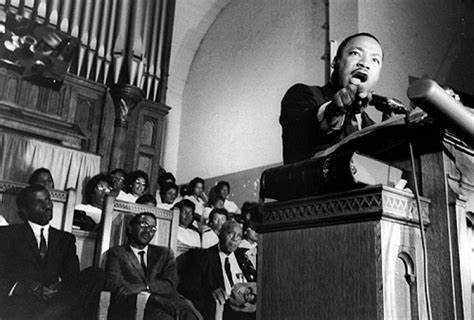
The four titles we hear in the story today, centers Jesus as the one doing the heavy lifting of the relationship with the disciples so that they are set free to participate in Jesus’ love for the world. This weekend, our country celebrates Reverend Doctor Martin Luther King Jr.’s birthday. We often hear him referred to as Dr. King. Less often do we hear him referred to by both of his titles – Reverend and Doctor. And far less often, maybe never, do we hear him referred to with his primary identity as Child of God. But it was his identity as Child of God, imperfect and beloved, that freed him to risk everything, even his own life, as he worked with Black Americans in securing their Civil Rights. But he didn’t stop there. He worked with American Jews and White Christians, expanding the circle of activists to address issues of poverty and violence too. As Children of God, we are drawn by Jesus into ever expanding relationships through which we hear all kinds of voices quite different from our own.

We’ll experience a small but mighty whisper of the power of our differences as we sing our Sending Song at the end of worship today. Sometimes called the Black National Anthem, we’ll join our voices with our Black friends, family, and siblings in faith as we sing, “Lift Every Voice and Sing.” Black communities of faith traditionally sing this song slowly, a practice that we’ll follow this morning. When we get to it, settle in and enjoy either singing or listening. In ways like hymn singing, we participate across our differences symbolically. As we sang in Psalm 40 this morning: The Lord put a new song in my mouth, a song of praise to our God; many shall see, and stand in awe, and put their trust in the Lord.[7]

Released from fear, freed by Jesus who calls us to “Come and see,” we participate in God’s ministry of freedom for all people – including continuing to advocate with our Black friend, family, and neighbors – in ways that are more than symbolic too. We participate in ways that are systemic, advocating with our neighbor for their good as well as our own.

As people in the United States, we can get pretty antsy about the separation of church and state. The Founders of the United States were clear that the church should not control the government and that the government should not control the church. Both are healthier without oppression by the other and with freedom from a sense of entitlement over the other. As Jesus followers, we are called by our faith to the good of our neighbor. In the Bible, our neighbor can be anyone and includes everyone.[8] Jesus taught his followers to feed the hungry, heal the sick, care for the stranger, and to free the prisoners. This was not symbolic, and it wasn’t only about charity, although giving food and money and other items are needed to ease immediate suffering. Something you all as a congregation have a lot of heart for. Our prayer after communion in the worship liturgy for these Sundays after Epiphany prays to God to “renew our strength to do justice, love kindness, and walk humbly with you.” A reference to Bible verses in the book of Micah, chapter 6.[9]

Kindness can be understood as charity – that which we give away to people who need it. And justice is understood as making systemic changes so that people don’t need us to give them those things. Our Soup Shelf is charity. Our money gifts to buy Advent Farms for ELCA World Hunger is part charity and part justice because the farms create a systemic change for families around the world to produce food for themselves and to sell at market.[10] Augustana’s CAN[11] Ministry Human Dignity Delegates are undertaking justice work at both the state and local levels this spring. At the state level, the Colorado Legislative session begins next week. There will be opportunities aplenty for us to advocate with our neighbors for legislation for their good as well as our own. Stay tuned for them. Lend your voice, time, and energy to them.

Denver residents, please check your weekly Epistle emails for a link or find a hard copy of the Vision for Denver card at the Sanctuary entrances. For the first time in 12 years, the most influential elected offices in Denver – from the Mayor to key city council districts to the auditor – are up for election in open races with no incumbents. Over the next few months, we have a once-in-a-decade opportunity to shape the future of our city and center issues of human dignity. So that one day we have a community that “prioritizes care over punishment, healthy air and water, housing that we can all afford, and a Denver where everyone belongs no matter where we’re from.” Augustana is joining with other faith communities – Jewish, Christian, Buddhist, Muslim, and more – across the city to advocate for Together Colorado’s Vision for Denver. The Human Dignity Delegates hope for over 100 responses from Augustana to join the thousands of others to come. Like I said a few weeks ago, everyone can’t do everything but some of us can do one thing.

Christianity is a faith that expanded from God’s promise to the Jews to include the rest of the world. God promises to be with us today and forever. The eternal part of the promise frees us from our fear while today’s part of the promise invites us into God’s love for the world through Jesus. The promises are more than symbolic. The promises come through Jesus in whom we live and move and have our being.

Jesus, the Lamb of God who brings us to God.

Jesus, the Son of God who reveals the face of God and created us in the image of God.

Jesus, the Rabbi who invites our participation in the ministry of God.

Jesus, the Messiah who inspires us to work towards the messianic hope of peace.

Thanks be to God. And amen.

________________________________________________

[1] Jillian Engelhardt, Adjunct Instructor, Texas Christian University, Fort Worth, TX. Commentary on John 1:29-42 for January 15, 2023. https://www.workingpreacher.org/commentaries/revised-common-lectionary/second-sunday-after-epiphany/commentary-on-john-129-42-6

[2] John 1:1, 14, 18

[3] Ibid., Engelhardt.

[4] Ibid.

[5] Ibid.

[6] Pastor Ann Hultquist preaches on Livestream on January 8, 2023, minute 41:25. While you’re at it, catch the ridiculous cuteness of her time with the kids on the steps at minute 35:22. https://www.youtube.com/watch?v=E55OBybmIl0

[7] Psalm 40:3

[8] See Jesus’ teaching about the Good Samaritan as one example – Luke 10:25-37

[9] Micah 6:6-8

[10] Don Troike in the soon to be published February Tower newsletter of Augustana.

[11] CAN = Augustana’s Compassion and Action with our Neighbor Ministry

___________________________________________________________

Psalm 40:1-10

I love to do your will, O my God. (Ps. 40:8)
1I waited patiently up- | on the Lord,
who stooped to me and | heard my cry.
2The Lord lifted me out of the desolate pit, out of the | miry clay,
and set my feet upon a high cliff, making my | footing sure.
3The Lord put a new song in my mouth, a song of praise | to our God;
many shall see, and stand in awe, and put their trust | in the Lord.
4Happy are they who trust | in the Lord!
They do not turn to enemies or to those who | follow lies. R
5Great are the wonders you have done, O Lord my God! In your plans for us, none can be com- | pared with you!
Oh, that I could make them known and tell them! But they are more than | I can count.
6Sacrifice and offering you do | not desire;
you have opened my ears: burnt-offering and sin-offering you have | not required. R
7And so I said, “Here I | am; I come.
In the scroll of the book it is writ- | ten of me:
8‘I love to do your will, | O my God;
your law is | deep within me.’ ”
9I proclaimed righteousness in the | great assembly;
I have not restrained my lips, O | Lord, you know.
10I have not hidden your righteousness in my heart; I have spoken of your faithfulness and | your deliverance;
I have not concealed your steadfast love and truth from the | great assembly.

A Christmas Kiss [OR Baby or Bearded, Jesus is a Face of God’s Love] Luke 2:1-20 and Isaiah 9:2-7


Caitlin Trussell with Augustana Lutheran Church on December 24, 2022 – Christmas Eve

[sermon begins after two long-ish Bible readings]

Luke 2:1-20 In those days a decree went out from Emperor Augustus that all the world should be registered. 2This was the first registration and was taken while Quirinius was governor of Syria. 3All went to their own towns to be registered. 4Joseph also went from the town of Nazareth in Galilee to Judea, to the city of David called Bethlehem, because he was descended from the house and family of David. 5He went to be registered with Mary, to whom he was engaged and who was expecting a child. 6While they were there, the time came for her to deliver her child. 7And she gave birth to her firstborn son and wrapped him in bands of cloth, and laid him in a manger, because there was no place for them in the inn.
8In that region there were shepherds living in the fields, keeping watch over their flock by night. 9Then an angel of the Lord stood before them, and the glory of the Lord shone around them, and they were terrified. 10But the angel said to them, “Do not be afraid; for see—I am bringing you good news of great joy for all the people: 11to you is born this day in the city of David a Savior, who is the Messiah, the Lord. 12This will be a sign for you: you will find a child wrapped in bands of cloth and lying in a manger.” 13And suddenly there was with the angel a multitude of the heavenly host, praising God and saying,
14“Glory to God in the highest heaven,
and on earth peace among those whom he favors!”
[
15When the angels had left them and gone into heaven, the shepherds said to one another, “Let us go now to Bethlehem and see this thing that has taken place, which the Lord has made known to us.” 16So they went with haste and found Mary and Joseph, and the child lying in the manger. 17When they saw this, they made known what had been told them about this child; 18and all who heard it were amazed at what the shepherds told them. 19But Mary treasured all these words and pondered them in her heart. 20The shepherds returned, glorifying and praising God for all they had heard and seen, as it had been told them.]

Isaiah 9:2-7

2The people who walked in darkness
have seen a great light;
those who lived in a land of deep darkness—
on them light has shined.
3You have multiplied the nation,
you have increased its joy;
they rejoice before you
as with joy at the harvest,
as people exult when dividing plunder.
4For the yoke of their burden,
and the bar across their shoulders,
the rod of their oppressor,
you have broken as on the day of Midian.
5For all the boots of the tramping warriors
and all the garments rolled in blood
shall be burned as fuel for the fire.
6For a child has been born for us,
a son given to us;
authority rests upon his shoulders;
and he is named
Wonderful Counselor, Mighty God,
Everlasting Father, Prince of Peace.
7His authority shall grow continually,
and there shall be endless peace
for the throne of David and his kingdom.
He will establish and uphold it
with justice and with righteousness
from this time onward and forevermore.
The zeal of the Lord of hosts will do this.

[sermon begins]

“They look like themselves,” Mom said, when I asked her who a newly born cousin looked like. She would say, every time, that they looked like themselves. When my own kids were born, I asked Mom who she thought they looked like – Rob or me or both – and she said that they looked like themselves. I don’t know where she came up with this phrase, but I like to think it’s because my siblings and I are a mix of biological and adopted children. Rather than complicate the question with a complicated answer, she found a simple way to answer it and moved on. I was recently telling a friend about my mom’s way of describing babies and she had a story of her own. When her first baby was born, she said to the nurse, “He doesn’t look like anyone I’ve ever seen before.”[1] The nurse replied, “Because you haven’t.” What my mother and my friend were both saying is that each baby is their own story waiting to happen as part of the larger story of their family.

Jesus’ family extended beyond biology, as my family does with adoption, and perhaps your family does too in different ways.[2] Joseph, the adoptive father, ultimately welcomes the sweet baby Jesus as his own (keeping us guessing for a tense moment), after Mary consented to God’s wild plan. The new parents kissed the face of Jesus, kissing the face of God, looking like no one they’d ever seen before, looking like himself – beyond biology yet oh-so-human. A Christmas kiss for the ages, no mistletoe in sight.

In the meantime, the angel sent the shepherds to look for the sign of God’s promise. “This will be a sign for you,” the angel said, “you will find a child wrapped in bands of cloth and lying in a manger.” A sign unto himself.[3] That’s Jesus for you – looking like himself. The shepherds, frozen by fear in front of the angel, quickly launched into action as their fear thawed. Who knows what they were expecting during their hasty run from the field to the manger side. I picture them turning up at the manger sweaty and out of breath. Words tumbling out as they talk over each other to tell the story about the angel in the field, and Mary and Joseph looking at the shepherds, the baby, and each other with wide amazed eyes, wondering what in heaven’s name is going on. I wonder what the shepherds were expecting after their foot race. They could have looked at the baby Jesus and thought, “Huh, just a baby, if you’ve seen one, you’ve seen ‘em all.”[4] Whatever they thought they saw, they returned to the fields around Bethlehem, praising God for the good news that they had seen and heard.

Our world focuses on bad news much of the time. Bad news makes money for the bad news sellers while making everyone else afraid. The Christmas story hints at bad news with the registration ordered by Caesar Augustus. The census registration was the reason that Mary and Joseph went to Bethlehem. In the first century, censuses were taken for money reasons – so that the people could be taxed, and for military reasons – so that people could be conscripted into the Roman armies. The census was serious business taken seriously by Rome. The presence of Roman soldiers would not have been a surprise. The census was NOT a party. The census was the power and strength of Caesar casting a wide net. But the census is a placeholder in the story, almost as if it was the least interesting part.

We’re reminded that the real action happened outside the seat of power. The good news was announced in a field under angel-light, to shepherds focused on sheep birthing their lambs, the power of nature mid-wifed through their hands. The shepherds ran from the birthing fields to see a newborn in a manger who would one day be called THE Good Shepherd. The baby Jesus wrapped in bands of cloth when he was born echoing the crucified Jesus wrapped in linen cloth when he died. The bands of cloth around the baby tease our memory with the rest of the story yet to come, the story of Jesus who risked everything to expand the circle of God’s love around even the most unlovable people in the eyes of the world. Christmas is just that risky and counter cultural.

The angel says, “Do not be afraid, for see, I bring you good news of great joy for all people.” From baby to bearded Jesus, the mystery of the good news unfolded through his adulthood right on through the next 2,022 years. The good news is that Jesus is born of God and of Mary. He is a shepherd leader who looks like himself. Looking like himself is good news for us who show up looking like ourselves, with our own reasons for being here, with our own stories to tell including the burdens camouflaged by Christmas cheer.

For you…

Maybe Jesus looks like the Good Shepherd who redirects your path.

Or maybe Jesus looks like the Wonderful Counselor who calms your troubled mind.

Or maybe Jesus looks like the Prince of Peace who calms a troubled world.

Maybe Jesus looks like a prophet who challenges power and the status quo, liberates the oppressed and fills the hungry with good things.[5]

For you:

Maybe Jesus looks like the One suffering on a cross, reassuring you that God suffers with you in pain and despair.

Or maybe Jesus looks like the Savior who promises that you are never the worst thing you have done and calls you beloved.

Maybe Jesus looks like the Easter Jesus, shining and shimmering with life eternal, sharing your moment of joy as you shout “Hallelujah.”

Or perhaps he’s that other Easter Jesus who holds your fragile moment of faith and doubt, reassuring you that there is nothing you can do or not do to make God love you any more or any less.

With that long Christmas list, it’s a good thing that Jesus looks like himself, arriving in God’s time as the face of God’s love. The good news is that regardless of what you see in Jesus’ face, the fullness of Jesus is present with you because of God’s love for the world and, by extension, God’s love for you. Merry Christmas and amen.

_________________________________________________-

[1] Pastor Barbara Berry Bailey, St. Paul Lutheran Church, Denver. Discussion about Luke 2:1-20 at Metro East Preacher’s Text Study on December 21, 2022.

[2] I love the way Dr. Amanda Brobst-Renaud makes this point in her commentary on Luke 2:1-20 for WorkingPreacher.org https://www.workingpreacher.org/commentaries/revised-common-lectionary/christmas-eve-nativity-of-our-lord/commentary-on-luke-21-14-15-20-16

[3] Stephen Hultgren, Lecturer of New Testament and Director of ALITE, Australian Lutheran College, North Adelaide, Australia. Commentary on Luke 2:1-20 for WorkingPreacher.org https://www.workingpreacher.org/commentaries/revised-common-lectionary/christmas-eve-nativity-of-our-lord/commentary-on-luke-21-14-15-20-13

[4] Berry Bailey, ibid.

[5] Luke 1:46b-55 – Mary’s Magnificat Song when she found out she was pregnant with Jesus.

Craving Christmas [OR A Brief Ode to Rob’s Cookies AND the Christmas Story]

**sermon art: Rob’s cookies packaged for delivery

A sermon for Bless the Years worship for our eldest elders and their companions.

Caitlin Trussell with Augustana Lutheran Church on December 15, 2022

[sermon begins after the Bible readings from Isaiah and Luke]

Isaiah 9:2-6 The people who walked in darkness
have seen a great light;
those who lived in a land of deep darkness—
on them light has shined.
3You have multiplied the nation,
you have increased its joy;
they rejoice before you
as with joy at the harvest,
as people exult when dividing plunder.
4For the yoke of their burden,
and the bar across their shoulders,
the rod of their oppressor,
you have broken as on the day of Midian.
5For all the boots of the tramping warriors
and all the garments rolled in blood
shall be burned as fuel for the fire.
6For a child has been born for us,
a son given to us;
authority rests upon his shoulders;
and he is named
Wonderful Counselor, Mighty God,
Everlasting Father, Prince of Peace.

Luke 2:1-20 In those days a decree went out from Emperor Augustus that all the world should be registered. 2This was the first registration and was taken while Quirinius was governor of Syria. 3All went to their own towns to be registered. 4Joseph also went from the town of Nazareth in Galilee to Judea, to the city of David called Bethlehem, because he was descended from the house and family of David. 5He went to be registered with Mary, to whom he was engaged and who was expecting a child. 6While they were there, the time came for her to deliver her child. 7And she gave birth to her firstborn son and wrapped him in bands of cloth, and laid him in a manger, because there was no place for them in the inn.
8In that region there were shepherds living in the fields, keeping watch over their flock by night. 9Then an angel of the Lord stood before them, and the glory of the Lord shone around them, and they were terrified. 10But the angel said to them, “Do not be afraid; for see—I am bringing you good news of great joy for all the people: 11to you is born this day in the city of David a Savior, who is the Messiah, the Lord. 12This will be a sign for you: you will find a child wrapped in bands of cloth and lying in a manger.” 13And suddenly there was with the angel a multitude of the heavenly host, praising God and saying,
14“Glory to God in the highest heaven,
and on earth peace among those whom he favors!”
15When the angels had left them and gone into heaven, the shepherds said to one another, “Let us go now to Bethlehem and see this thing that has taken place, which the Lord has made known to us.” 16So they went with haste and found Mary and Joseph, and the child lying in the manger. 17When they saw this, they made known what had been told them about this child; 18and all who heard it were amazed at what the shepherds told them. 19But Mary treasured all these words and pondered them in her heart. 20The shepherds returned, glorifying and praising God for all they had heard and seen, as it had been told them.

[sermon begins]

My husband is arguably a contender for king of the chocolate chip cookie. I know, I know, it’s not the classic Christmas cookier per se. But Rob modified and remodified an old chocolate chip cookie recipe many years ago and began baking these monster cookies for his clients at Christmas. Don’t bother asking, he does not divulge his secrets. When our kids were small, he would take them along on the adventure of cookie delivery. There was a part of him that thought the pandemic would end the tradition, but his clients became even more set on receiving the home-baked, ooey-gooey, chocolatey goodness. The cravings started again this year and they began asking in early November. Again this year, our kitchen was a flurry of flour and chocolate turned into dough that’s scooped onto rotating cookie sheets for many hours before being served to clients. He’s out delivering them this week. Rob’s cookies are a bit like the Christmas story itself. There’s a whole heap of mystery involved. There’s breathless anticipation. And there are a lot of people giving rapt attention to the final creation.

For Jesus followers, Christmas engages our imaginations beyond the homespun and kitschy décor that we know and love. During Advent, our waiting, watching, and wondering is focused on John the Baptist’s earthy ministry and Mary’s expanding pregnant belly. Jesus second coming is so mysterious that we don’t spend a ton of time on it except to say that it will be a good thing when the Prince of Peace returns. For me, one of the miracles of Christmas is that we keep returning to the story of a very young woman, an adoptive father, and a baby asleep on the hay. Our return to this story is almost more mysterious than the mystery of God showing up in a baby. Perhaps it’s because he’s more than a baby. Part of the mystery of any baby is the blank slate that they seem to be contrasted with the person they already are right the second they’re born and the person they’re already developing into. At Jesus’ birth, the angel announced “good news of great joy for the all the people,” In the baby Jesus, the mystery of the good news unfolded through his adulthood right on through the next 2,022 years.

Isaiah wrote about a child who is wonderful, who counsels, who is everlasting, and who brings peace. That child sounds like someone worth waiting for and worth knowing. As it turns out, that child sounds like a Savior worth waiting for with breathless anticipation. Perhaps it’s because if you live long enough, it’s obvious we need some saving. We spoke our confession at the beginning of this worship service because we need saving. We need saving from ourselves and from the harm we inflict on one another. In the Gospel of Luke, the angels sang a starlit announcement to the shepherds who were ready to hear the good news of this child’s arrival and eager to see it for themselves. Maybe they needed to be saved from themselves and each other too. Their awe of the angel encounter inspired breathless anticipation. Who knows what they were expecting during their hasty run from the field to the manger side. I picture them turning up at the manger sweaty and out of breath. Words tumbling out as they talk over each other to tell the story about the angel in the field, and Mary and Joseph looking at the shepherds, the baby, and each other with wide amazed eyes, wondering what in heaven’s name is going on.

The angel told the shepherds that the sign of the Savior will be found in “a child, wrapped in bands of cloth and lying in a manger.” Their anticipation and haste turned rapt attention towards this brand new little one. It fascinates me that the baby Jesus was wrapped in bands of cloth when he was born and the crucified Jesus was wrapped in linen cloth when he died. The bands of cloth around the baby tease our memory with what’s to come. I think that’s also why revisiting the Christmas story each year is worth another go round. It’s not just a convenient annual celebration. It’s a moment in time that draws our attention toward what this could possibly mean.

Like Mary, we treasure the story that the angels sang and the shepherds told and ponder the mystery in our hearts. The Christmas mystery prompts our anticipation, regardless of how breathless it may be, and draws our attention to this ancient story, making it new again each year. We’ve learned over the years to crave the hush and wonder of the Christmas story as we’re scooped into God’s timeless story and served into the world that God so loves. A world in need of a Savior who forgives and heals. A world in need of a Savior who brings peace.

Thanks be to God and amen.

Impatient Patience? Yup, It’s a Thing [Matthew 11:2-11, Luke 1:46b-55, James 5:7-10]

Caitlin Trussell with Augustana Lutheran Church on December 11, 2022

[sermon begins after the Matthew Bible reading. The Luke and James readings are at the end of the sermon]

Matthew 11:2-11 When John heard in prison what the Messiah was doing, he sent word by his disciples 3and said to him, “Are you the one who is to come, or are we to wait for another?” 4Jesus answered them, “Go and tell John what you hear and see: 5the blind receive their sight, the lame walk, the lepers are cleansed, the deaf hear, the dead are raised, and the poor have good news brought to them. 6And blessed is anyone who takes no offense at me.”
7As they went away, Jesus began to speak to the crowds about John: “What did you go out into the wilderness to look at? A reed shaken by the wind? 8What then did you go out to see? Someone dressed in soft robes? Look, those who wear soft robes are in royal palaces. 9What then did you go out to see? A prophet? Yes, I tell you, and more than a prophet. 10This is the one about whom it is written,
‘See, I am sending my messenger ahead of you,
who will prepare your way before you.’
11Truly I tell you, among those born of women no one has arisen greater than John the Baptist; yet the least in the kingdom of heaven is greater than he.”

[sermon begins]

My friend Beth and I have talked on the phone a lot lately. She’s one of the first friends that I made when I moved to Denver in my early 20s. Our conversations move quickly between silly, serious, sacred, and back again. What a gift. Beth’s mom, Maureen O’Brien Courville, had a few rough years health-wise but her sudden and recent death was unexpected.[1] The doctor told Maureen the news that she was in her last few days of life and within minutes she started telling her kids what she wanted done with her ashes, and the service and music, and then she said, “I am gonna die sober.” She smiled and said with pride, “I don’t care, let them know I am an alcoholic.” Maureen died the next day. Her daughter-in-law texted her words to the other kids so that everyone would remember exactly what Maureen said. Beth read me the text over the phone. I said, “Oh Beth, your mother died healed.” And then she cried while I cried with her.

John the Baptist was on a timeline like Maureen although his story was slightly different. He was in prison and soon to be executed. Regardless, his message was time sensitive in his last days too and not an epitaph but a question. It’s fascinating that he asked Jesus, “Are you the one who is to come or are we to wait for another?” John had no time for patience. He was out of time. He wanted definitive answers to his questions. It’s odd that he would have them. Questions, that is. Last Sunday, we heard John’s speech earlier in the Gospel of Matthew about the powerful One who was to come after him.[2] Just after that reading, John baptized Jesus in the Jordan River after almost refusing to do because of who he thought Jesus was.[3] But in prison, John had questions. “Are you the one who is to come or are we to wait for another?” Jesus’ reply to John’s questions is awesome. Of course, it’s not “Well, yes, wait no more, I’m the one who is to come!” That would be too easy. Instead Jesus points to others who embody the answer to John’s questions – those who now see, hear, and walk; and those who are cleansed, raised, and receive good news.[4] We could summarize these folks into the ones whose lives are transformed, the ones who are healed.

I gotta tell you that that answer makes me impatient even as the James’ reading calls us to patience. In this life, in these fragile bodies, the now and not yet of God’s kingdom promise is only partially revealed. Or as the Apostle Paul says about life on earth elsewhere in the Bible, “For now we see through a glass dimly, but then we will see face to face; Now I know only in part; then I will be fully known…And now faith, hope, and love abide, these three; and the greatest of these is love.”[5] Paul’s words are pretty and they’re meaningful. But in the face of our human frailty, James’ call to patience is a challenge when there are folks who want to see, hear, and walk now, and when there are people who are poor who need good news now. I hear James’ call to patience which makes me hear Jesus’ response to John the Baptist as patience training.

Jesus gave clues about what God’s kingdom looks like. It looks like seeing, hearing, and walking. It looks like being raised and also like poor folks being brought good news. Not in the sweet by and by but in the sacred now. Jesus then praises John as a prophet but more than a prophet, a messenger of Jesus, a preparer of the way, greater than anyone else born. Jesus was ready to share.

I like to think of him as sharing power with John. John was a leader in his own right. He preached in the wilderness about the kingdom of heaven come near. People flocked to see him, listen to him, and be baptized by him. John the Baptist had disciples of his own as our reading today describes them in verse two. Jesus shared power with John as he praised him. How is the question about Jesus answered? Jesus shares his power. Jesus shared himself with his own disciples, with the people around him, with John, and with John’s disciples.

My friend Beth’s mother Maureen shared her power too. The day before she died, she wanted people to know her truth. First that she was sober and then that she was an alcoholic. “I am gonna die sober” she said, “I don’t care, let them know I’m an alcoholic.” She wanted it known that her body held an incredible challenge and a profound hope – both at the same time – so that her truth could serve others who may be actively struggling with their sobriety and shame, so that her truth could offer a taste of something different, a taste of hope in her rejoicing.

We sang the song of Jesus’ mother Mary as a hymn earlier in worship. Called the Magnificat because Mary sings about her soul which magnifies the Lord, proclaiming God’s greatness. She also sings about her rejoicing spirit because she consented to God’s invitation. As Mary sings, she shares her praise for God’s mercy and strength, God who lifts the lowly, fills the hungry, and inspires the rich to leave empty handed – sharing what they have, transformed by God’s promise. Mary sings and inspires a holy imagination. An imagination that acknowledges our need for God’s mercy while we make mistakes that hurt us and our neighbors and, at the same time, an imagination fueled by same power of the Holy Spirit that birthed God’s love into the world for the sake of the world. An imagination that names the tension between God’s promise and the fulfillment of God’s promise as the kingdom come here and now.[6]

As Jesus followers, we are an Advent people. Waiting on the promise of a pregnancy, a baby, a Messiah. Waiting with patience while impatiently naming the frustrations of the human condition. Claimed by hope so then able to tell the truth of our fragility, our pain, and our suffering through the eyes of a suffering Christ. There are times of suffering when the hope feels insufficient. We struggle with why things happen the way that they do. Like John the Baptist in prison, we struggle to see Jesus as the one who is coming and we wonder if we should wait for another. Like John, we long for action and answers when we find ourselves stuck in a box asking unanswerable questions.[7]

And still, like Mary, we sing as our spirits rejoice in God’s saving grace, as we endlessly clear our Advent eyes to see signs of God’s kingdom come near. We are an Advent people, waiting with impatient patience and gathered by God’s grace to proclaim the mystery of faith, a rejoicing hope, and the depth of divine love revealed in the One who is to come. Thanks be to God. And amen.

__________________________________________

[1] Beth gave me permission to use her mother’s story and name as a tribute to her mother.

[2] Matthew 3:11

[3] Matthew 3:13-17

[4] Matthew 12:4-5

[5] 1 Corinthians 13:12-13

[6] Matthew L. Skinner, Professor of New Testament, Luther Seminary, St. Paul, MN. Advent Perception for Dear Working Preacher. https://www.workingpreacher.org/dear-working-preacher/advent-perception?utm_campaign=Working%20Preacher&utm_content=230466817&utm_medium=social&utm_source=twitter&hss_channel=tw-23086402

[7] Skinner, ibid. I love this line that Dr. Skinner uses about preachers being “under the impression they’ve signed up to be part of the action, not stuck in a box.” It’s applicable to Christians more generally as well.

___________________________________________________

James 5:7-10 Be patient, therefore, beloved, until the coming of the Lord. The farmer waits for the precious crop from the earth, being patient with it until it receives the early and the late rains. 8You also must be patient. Strengthen your hearts, for the coming of the Lord is near. 9Beloved, do not grumble against one another, so that you may not be judged. See, the Judge is standing at the doors! 10As an example of suffering and patience, beloved, take the prophets who spoke in the name of the Lord.

Luke 1:46b-55 Mary’s Magnificat

And Mary* said,
‘My soul magnifies the Lord,
47   and my spirit rejoices in God my Saviour,
48 for he has looked with favour on the lowliness of his servant.
Surely, from now on all generations will call me blessed;
49 for the Mighty One has done great things for me,
and holy is his name.
50 His mercy is for those who fear him
from generation to generation.
51 He has shown strength with his arm;
he has scattered the proud in the thoughts of their hearts.
52 He has brought down the powerful from their thrones,
and lifted up the lowly;
53 he has filled the hungry with good things,
and sent the rich away empty.
54 He has helped his servant Israel,
in remembrance of his mercy,
55 according to the promise he made to our ancestors,
to Abraham and to his descendants for ever.’

Hope Gains Ground [OR Blundering Our Way Through the Human Condition OR The First Sunday in Advent] Matthew 24:36-44

Caitlin Trussell with Augustana Lutheran Church on November 27, 2022 – First Sunday in Advent

[sermon begins after Bible reading]

Matthew 24:36-44  [Jesus said to the disciples,] 36“About that day and hour no one knows, neither the angels of heaven, nor the Son, but only the Father. 37For as the days of Noah were, so will be the coming of the Son of Man. 38For as in those days before the flood they were eating and drinking, marrying and giving in marriage, until the day Noah entered the ark, 39and they knew nothing until the flood came and swept them all away, so too will be the coming of the Son of Man. 40Then two will be in the field; one will be taken and one will be left. 41Two women will be grinding meal together; one will be taken and one will be left. 42Keep awake therefore, for you do not know on what day your Lord is coming. 43But understand this: if the owner of the house had known in what part of the night the thief was coming, he would have stayed awake and would not have let his house be broken into. 44Therefore you also must be ready, for the Son of Man is coming at an unexpected hour.”

[sermon begins]

Classic blunders often make a good story great. Blunders abound in television and movies. In every episode of Scooby Do, Fred insists that the gang split up, sending Shaggy and Scooby to their inevitable clash with the masked villain.[1] What would the show “I Love Lucy” be without Lucy and Ethel’s regular blunders – think: Chocolate Factory episode when they lied about their qualifications and couldn’t keep up with the candy conveyor belt, so they stuff chocolate in their mouths and cloths before getting fired.[2] The movie Princess Bride lays out a few more classic blunders, “the most famous is never get involved in a land war in Asia, but only slightly less well known is this, never go in against a Sicilian when death is on the line.”[3]

Real life blunders abound too although the outcomes are, well, real. Falling asleep while driving is a big one. Cars didn’t exist back in the day when Jesus was teaching his disciples. But Jesus’ words about staying awake call to mind that classic parting line before a road trip, “Remember to pull over if you get tired!” It’s classic because we all know and can tell our own and other tragic stories when people haven’t pulled over when they got tired. Driving takes focus. We need to be ready to swerve around obstacles or avoid bad drivers or simply avoid driving into a ditch. Driving takes wakefulness. When we’re tired, eye-hand coordination slows down affecting response times.

Driving is a metaphor for Advent wakefulness. The Advent road trip ends at Christmas – the joy of Jesus’ birth, and it is also the longing for Christ’s return when the Kingdom of Heaven will reign fully and completely on earth. In the meantime, Jesus tells his disciples to stay awake, keep your eyes on the road. Worship this morning serves as pulling over because we’re tired and resting up on the side of the road to continue driving. This apocalyptic reading from the Gospel of Matthew may seem a surprising choice for the first Sunday in Advent, the start of the new church year. But apocalyptic literature is directed to listeners who blunder through the human condition, who have lost hope with the status quo, who despair that those with extreme wealth and power will ever share so that all people can live, who see that suffering goes unexplained and unanswered, and who long for God’s promise to burst on the scene in all its fullness.[4]

This reading is close to the end of the book of Matthew, just before Jesus starts heading to the cross. As we begin this new church year with Advent, we also begin the book of Matthew, beginning almost at the end. The Gospel of Matthew was likely written late in the first century, after the destruction of the Jerusalem Temple, fifty years after Jesus’ death. The Matthean community seems to have been primarily Jews who believed Jesus was their long-awaited savior. Initially a part of life in the synagogue, a conflict began with either other Jews, or with Roman authorities, or both, that escalated to the point of the Matthean group splitting off to form its own community.[5]

The verses today are a good example of the divide as well as illuminates what we think we already know about these verses.  For instance, in this story, is it better to be taken or left behind? The comparison with the people swept away by the flood in the Noah story indicates that being left behind might be the better outcome. If it’s the case that being left behind is the better option, it brings up another question. Who is doing the taking? The verses aren’t clear, which opens the possibility that there’s a group, perhaps Roman agents, who is taking some people while others remain – not unheard of in the Roman Empire or modern empires for that matter. If it’s possible that Rome is snatching people, why are we so quick to read it as divine judgment. Another blunder we make when we read scripture is already thinking that we know the destination. Framing Jesus’ teaching to the positive, he encourages listeners to actively anticipate God’s promised change when the Kingdom of Heaven arrives. To the negative, living a righteous life veers into the ditch when resignation or over-confidence are chosen as the right way to live.[6]

It’s not clear how pandemic times accelerated the time/space continuum. The Before Times weren’t trouble free but they didn’t seem to move quite so quickly. However it happened, the world came out of those quieter months in overdrive and keeps accelerating. Advent driving includes slowing down, steering with intention, and staying awake to truths that reveal where hope is losing ground.

Our queer siblings in the human family know the truth of hope’s lost ground all too painfully in the recent murders at ClubQ in Colorado Springs. When theologies and political ideologies collide into murder, we can be pretty sure that is not what Jesus would do. It is ever more life affirming to be queer affirming too. Humans are created in God’s image. All humans. Our queer selves, family, friends, and neighbors are necessarily created in God’s image too. Lives are at stake in the claims we make as Christians. Unconditional, assumption-shattering, prodigal love is the only way out of the sinkhole of hate. An active love through which hope gains ground. That is the hope that drives us in Advent. The hope that we long for and are a part of.

Awake and cruising into Advent we have a few driving instructions available to keep us on the road. One is more classically considered devotional, daily fueling our faith with God’s activity, promise, and hope. You can pick up one of these pocket-sized devos at the Sanctuary entrances. Called “prophets & promises: Devotions for Advent and Christmas 2022,” we’re given short bits of scripture, story, picture, and prayer for each day. Lighting our driven days with Advent hope so that God draws our attention rather than the dead end of commercial chaos.

Also part of our Advent road trip is a topographical map of sorts. The rolling hills and water features of the book Sleepers Wake drives our devotion into the discipleship depths of Climate Change. “Shot through with hope,” these daily reflections augmented with paintings, explore how we can remove obstacles for healing the earth injured by our human blunders.[7] With energy and heart, Nicholas Holtam draws on his experience as former Church of England lead Bishop for the environment to guide our spiritual and cultural transformation, so we can all do our part to preserve our world for future generations. A big thanks to Bonita Bock, retired pastor and professor and Augustana member, for leading us through Sleepers Wake in classes scheduled on Sunday or Wednesday mornings starting this Wednesday.[8]

Continuing down this road of Advent where hope gains ground, we drive through the four weeks towards Christmas avoiding the blunder of sleeping at the wheel and hurting people with our momentum in the wrong direction. We heed Jesus’ command to stay awake. Culturally, the season has a careening quality that we can’t entirely avoid. But there are maps given to us, and our faith drives us towards a different horizon, one with a manger snuggled in the midst of a bustling Bethlehem with full inns, one with the Kingdom of Heaven arriving in the fullness of God’s promises as Jesus will come again.

This Advent season, as we worship together on the road towards Christmas, we are reminded that the God of hope and truth lightens our load, reminding us that we are never the worst blunder we have ever made, that we are loved beyond reason, and held by Christ who knows our human suffering firsthand. This Advent season, starting today and into this week, may you be blessed with the swaddled hope on the horizon that is Christ Jesus our Lord.

Thanks be to God. And Amen.

____________________________________________________________

[1] Scooby-Doo, Where Are You! (Hanna-Barbera: 1969-1970) https://youtu.be/Bsg3sMPD4XA

[2] I Love Lucy (Paramount: 1951-1957). https://youtu.be/AnHiAWlrYQc

[3] Princess Bride. https://youtu.be/-WTelEdb6jk

[4] Matt Skinner, Professor of New Testament, Luther Seminary, St. Paul, MN. Dear Working Preacher: Matthew 24:36-44 – Advent Attentiveness. November 20, 2022. https://www.workingpreacher.org/dear-working-preacher/advent-attentiveness?fbclid=IwAR0vLeMtMn5rN1vTedkX67LVO0AFam5juKsqHFrh7WMT59U9RIgGti1pxGk

[5] Matthew L. Skinner. The New Testament: The Gospels and Acts. “The Gospel of Matthew.” (Waco: Baylor University Press, 2017), 114-115.

[6] Skinner, Working Preacher, Ibid.

[7] Nicholas Holtam. Sleepers Wake: Getting Serious About Climate Change. (London: Society for Promoting Christian Knowledge, 2022).

[8] RSVP to the church office (303-388-4678 or info@augustanadenver.org) for the Wednesday classes, 9:30-10:30 a.m., 11/30, 12/7, 12/14, and 12/21. There is a minimum of eight participants required for this class to proceed. Sunday classes are 9:15-10:15 a.m. between worship services.

First Nations Version: An Indigenous Translation of the New Testament on All Saints Sunday [OR Sainty/Sinnery Wisdom and Understanding with a Dash of Love] Ephesians 1:11-23

Pastor Caitlin Trussell with Augustana Lutheran Church on November 6, 2022

[sermon begins after Bible reading; Find the Gospel of John reading at the end of the sermon. I don’t preach on it today but it’s a good one.]

Ephesians 1:11-23   In Christ we have also obtained an inheritance, having been destined according to the purpose of him who accomplishes all things according to his counsel and will, 12so that we, who were the first to set our hope on Christ, might live for the praise of his glory. 13In him you also, when you had heard the word of truth, the gospel of your salvation, and had believed in him, were marked with the seal of the promised Holy Spirit; 14this is the pledge of our inheritance toward redemption as God’s own people, to the praise of his glory.

15I have heard of your faith in the Lord Jesus and your love toward all the saints, and for this reason 16I do not cease to give thanks for you as I remember you in my prayers. 17I pray that the God of our Lord Jesus Christ, the Father of glory, may give you a spirit of wisdom and revelation as you come to know him, 18so that, with the eyes of your heart enlightened, you may know what is the hope to which he has called you, what are the riches of his glorious inheritance among the saints, 19and what is the immeasurable greatness of his power for us who believe, according to the working of his great power. 20God put this power to work in Christ when he raised him from the dead and seated him at his right hand in the heavenly places, 21far above all rule and authority and power and dominion, and above every name that is named, not only in this age but also in the age to come. 22And he has put all things under his feet and has made him the head over all things for the church, 23which is his body, the fullness of him who fills all in all.

[sermon begins]

I miss my mother-in-law this time of year.Carol died seven days after Thanksgiving in 2018.[1]  She loved autumn, decorating tables with mini pumpkins along with dried leaves and seed pods of all kinds. We spent Thanksgiving with them during most of their time in Grand Junction. After I received this call to Augustana, they started coming here for Thanksgiving Eve worship and Pie Fest, adding their cans of chili to the pile. Carol’s sparkly, cornflower blue eyes were usually full of mischief. Between her salt of the earth Iowa farm girl ways and her salty language, she couldn’t be pegged into any one category. She was saint and sinnery in her own way. Carol’s last Thanksgiving included her attempt to help Rob with the turkey as he came through the sliding glass door, almost scalding herself in the process. You can take the woman out of the Iowa farm, but you can’t take the Iowa farm out of the woman. She was ready to wrestle Rob for the turkey pan although she no longer had the strength to do so. I had the instant reaction to yell, “Carol, NO! What part of ‘don’t touch the turkey’ do you not understand!” It was one of two of my most disrespectful interactions with her. The second of which was the prior Thanksgiving in a similar turkey incident.

After dinner, when she had taken her usual position at the kitchen sink (I tried to get her to sit down for 30 years), I put my arm around her shoulders and told her that I was sorry for yelling at her. She put her head on my shoulder, and said, “Aww, hon, I don’t even remember that – I love you.” I said, “I love you, too.” Seven days later, I couldn’t have been more grateful for that exchange at the kitchen sink. I’m still grateful for it and for having her in my life. Carol was the first person to ask when Rob and I were “baptizing that baby.” We’d both been away from church awhile and it honestly wasn’t our first thought. But, oh, I’m so glad she did. Baptizing Quinn and then Taryn enfolded us in a church community that we’re forever grateful for. The gospel was preached in love there. I received it as such and here I stand preaching today. It all started with baptism.

The baptismal liturgy has pieces of the Ephesians reading. There’s a prayer after the water part when the pastor places their hands on the head of the baptized and prays:

“Sustain them with the gift of your Holy Spirit, the spirit of wisdom and understanding, the spirit of counsel and might, the spirit of knowledge and the fear of the Lord, the spirit of joy in your presence, both now and forever. Amen.”

The prayer in Ephesians asks that God “give a spirit of wisdom and revelation.”[1a] The baptism liturgy helps us with that word “revelation” by using the word “understanding.” Revelation means to see something new or in a new way. Understanding is the ability to interpret that new thing. A spirit of wisdom and understanding. Biblical translation and word choices are interesting. In seminary, pastors are trained in Greek and sometimes Hebrew to understand the original biblical texts. Martin Luther was the first to translate Greek and Hebrew into the German Bible. His sense of his own sin overpowered him, making God’s grace all the sweeter for him.  Every translation makes word choices to convey meaning which is why biblical literalism is a fool’s errand. But wisdom and understanding, now those are possible by the power of the Holy Spirit.

Wisdom and understanding come from experience, teaching, learning, prayer, and more. Wisdom and understanding come from having your mind blown when you think you already have the answers, being humbled by new information that doesn’t fit into your current thinking. A recent example in my own life includes reading portions of the new First Nations Version: An Indigenous Translation of the New Testament.[2] [3] First Nations is a term that started in Canada for original inhabitants of the land interchangeably called American Indians or Native Americans. The term has been accepted and used by some people in the U.S. and all over the world. The translation council, along with other First Nation people who provided feedback, represented a variety of tribes, ages, genders, denominations, and geographic locations to reduce bias.

The First Nations Version is dedicated to healing people through the “good story,” people who have suffered at the hands of our colonizing government helped by churches and missionaries, who stole their land, language, culture, and children.[4] The beauty of this new version of the New Testament is hard to describe because the words and flow have the cadence of First Nation storytelling. It would be ridiculous for me to try as a White pastor of Scandinavian and Irish descent. But much like the original and utterly scandalous German translation was liberating to 16th century Germans, and the variety of English translations find their way into English-speaking hearts, the First Nation Version attempts to do so for First Nation peoples. This new translation is one more way that the Holy Spirit brings wisdom and understanding through the diversity of the baptized.

Wisdom and understanding come through baptism which includes the theology of saint and sinner. If you hang around Lutheran Christians long enough, you’ll inevitably hear that phrase “Saint and Sinner.” The fancy pants way to say it (or tatoo ink it) is, “Simul iustus et peccator,” or “Simultaneously justified and sinner.” This means that we are both saint and sinner at the same time because of Christ’s righteousness bestowed on us in baptism and our simultaneous capacity to sin against ourselves and our neighbors. If you read into the next verses of Ephesians, after the sainty parts in our reading today, you’ll get to the trespass and sin part. When I’m out in the community or formally welcoming folks at the beginning of a funeral, I’ll sometimes bring greetings or welcome “from the Sinner/Saints of Augustana Lutheran Church.” The phrase is just confusing enough to make it intriguing, while at the same time acknowledging who we are in the world.

On All Saints Sunday we acknowledge the saints who have died, completing their baptismal journeys and celebrating in the company of all the saints in light. This is not to say that they were perfect people doing miraculous things. Rather, it’s to say that God’s promises through their baptisms draw them ever closer to God right on through their last breath. I find myself in both grief and gratitude on All Saints Sunday. I think of the people who are named in worship and their impact on my own faith and on our congregation. I think of the people I still miss – my father, stepfather, in laws, grandparents, friends, and patients.

And I think about the sinner/saints who persevered in faithfulness as the church so that I could hear a word of grace in Jesus Christ when I most needed it. I’m here because of their word of grace and their words of wisdom and understanding. I’m in awe of the wisdom of our youngest sinner/saints who bless us with their thinking week after week on the Sanctuary steps, right through to our eldest elders who we visit in their homes. I’m bowled over by the wisdom and understanding of sinner/saints who write or podcast about their faith and experience with the God of grace. I’m transformed by sinner/saints around the world and right here at home who speak different cultural and actual languages to talk about Jesus and his self-sacrificing love of us. All of us. Every single last one of us until, at the end of our baptismal journeys, God will bring us through the death and resurrection of Jesus into the company of all the saints in light.

All the wisdom and understanding in the world is just noise if we do not have love. The Ephesians letter in our reading today thanks the church for their love and their faith before praying that they receive wisdom and understanding. This is a time in the world when we need our sinner/saints who pray for us and who teach us to pray from that love. Much like the prayers for the Ephesians taught us to pray. Much like Carol taught me the prayers that were passed down through their family to her. Not perfect. Just perfectly loved by God and imperfectly lived out God’s love. I’m grateful for them. And I’m grateful for you, dear sinner/saints, as we get to be church with and for each other in these weird times in the world.

Thanks be to God. And amen.

__________________________________________________

[1] https://www.legacy.com/us/obituaries/gjsentinel/name/carol-trussell-obituary?id=10109452

[1a] Ephesians 1:17

[2] Terry M. Wildman. First Nations Version: An Indigenous Translation of the New Testament (Downers Grove, Illinois: First Varsity Press, 2021).

[3] I’m pretty grateful for Don Troike, Augustana member and retired Biology professor, who told me about the First Nations Version and lent me his copy.

[4] Read about First Nation history of boarding schools and the ELCA’s confession and intentions here: https://religionnews.com/2022/08/11/reckoning-with-role-in-boarding-schools-elca-makes-declaration-to-indigenous-peoples/

__________________________________________________

Luke 6:20-31  Then [Jesus] looked up at his disciples and said:
“Blessed are you who are poor,
for yours is the kingdom of God.
21“Blessed are you who are hungry now,
for you will be filled.
“Blessed are you who weep now,
for you will laugh.
22“Blessed are you when people hate you, and when they exclude you, revile you, and defame you on account of the Son of Man. 23Rejoice in that day and leap for joy, for surely your reward is great in heaven; for that is what their ancestors did to the prophets.
24“But woe to you who are rich,
for you have received your consolation.
25“Woe to you who are full now,
for you will be hungry.
“Woe to you who are laughing now,
for you will mourn and weep.
26“Woe to you when all speak well of you, for that is what their ancestors did to the false prophets.
27“But I say to you that listen, Love your enemies, do good to those who hate you, 28bless those who curse you, pray for those who abuse you. 29If anyone strikes you on the cheek, offer the other also; and from anyone who takes away your coat do not withhold even your shirt. 30Give to everyone who begs from you; and if anyone takes away your goods, do not ask for them again. 31Do to others as you would have them do to you.”

Mental Health Sunday [OR Preaching for the First Time About My Postpartum Depression] Luke 18:1-8 and Psalm 121

Caitlin Trussell with Augustana Lutheran Church on October 16, 2022

[sermon begins after two Bible readings]

Luke 18:1-8  Then Jesus told them a parable about their need to pray always and not to lose heart. 2He said, “In a certain city there was a judge who neither feared God nor had respect for people. 3In that city there was a widow who kept coming to him and saying, ‘Grant me justice against my opponent.’ 4For a while he refused; but later he said to himself, ‘Though I have no fear of God and no respect for anyone, 5yet because this widow keeps bothering me, I will grant her justice, so that she may not wear me out by continually coming.’ ” 6And the Lord said, “Listen to what the unjust judge says. 7And will not God grant justice to his chosen ones who cry to him day and night? Will he delay long in helping them? 8I tell you, he will quickly grant justice to them. And yet, when the Son of Man comes, will he find faith on earth?”

Psalm 121

I lift up my eyes to the hills— from where will my help come?

2My help comes from the Lord, who made heaven and earth.

3He will not let your foot be moved; he who keeps you will not slumber.

4He who keeps Israel will neither slumber nor sleep.

5The Lord is your keeper; the Lord is your shade at your right hand.

6The sun shall not strike you by day, nor the moon by night.

7The Lord will keep you from all evil; he will keep your life.

8The Lord will keep your going out and your coming in from this time on and forevermore.

[sermon begins]

These past few days, morning walks with Rob and our dog Sunny have been glorious (poop bags not so much). Bluebird skies, wisps of white clouds, sunlight blooming off leaves turned red, orange, pink, and yellow, hills in the distance with hints of the brighter colors close by. During one of these walks, I mentioned how much better I feel when I’ve made the effort to get myself out of the door. The cool breeze lightens burdens and heavier thoughts, and at the same time makes space for lifting people to God in prayer. Times like these walks, when thoughts are clearer and life is calmer, foster so much of the gratitude that Pastor Ann talked about last week. Gratitude that changes perspective and improves mental health. Gratitude for things that aren’t always seeable.

It’s hard to describe the darkness of mental illness. My experience with postpartum depression gave me a glimpse of how dark and out of control it feels. Things were tough after our first was born but the depression went into overdrive after our second child.  A mind hijacked by shame, I felt unworthy of love and the life I had. Everyone else seemed so happy as new parents and I was drowning in anger, losing my cool over the smallest things. Most of you wouldn’t recognize the me that I was then. I was able to camouflage my distress except from those closest to me who felt hurt and helpless. Therapy and time and getting more sleep and my husband’s determination and my eventual honesty about what I was going through and my apologies to the people who care about me and having a weekly reminder at worship of God’s grace and unconditional love, all worked together towards healing. If there’s one thing I’ve learned coming from generations of family who struggle with mental health, it’s that healing from mental illness is never just one thing. Healing is layered. It took a few years to fully recover my light and my confidence and to trust that I was loved. I am most fortunate to have had the support and the resources to make it through that dark time. I do wonder what the outcome would have been if I’d hadn’t had the support and resources.

Support and resources are part of what Mental Health Sunday is about. As we sang in our Gathering Song, we “build a house where love can dwell, and all can safely live.”[1] Part of the building this house is our honesty.

– Honesty that there are no quick fixes to mental illness.

– Honesty that our faith is a layer of healing – mental illness is NOT caused by lack of faith nor fixed by more faith as many of us were taught.

– And honesty that we need other people, some of whom are a congregation and some mental health professionals.

– Honesty that mental illness is a set of real diseases that are sometimes beyond our control to heal ourselves and sometimes beyond anyone’s control to heal completely.

– And honesty that our mental illnesses create pain for ourselves and the people we love.

We start worship with a word of confession about ourselves and hear God’s good word of forgiveness because both are true – we are broken and do hurtful things out of our own pain AND God’s mercy endures forever. Today’s parable of the widow and the unjust judge is a great illustration of both.

“God is everything the unjust judge is not.”[2] This is not a parable that slides God into the power role. But God is present. The widow’s urgent persistence is fueled by God’s promises of justice, by God’s alignment with orphans and widows who are lifted up throughout scripture as worthy of the community’s energy, money, and protection. She has nothing to fear from the unjust judge because her life is on the line. Death is her outcome should her plea for justice fail. The widow is a good example of why the church has a role in advocating for justice of all kinds so that support and resources are broadly available. Today, that means spotlighting mental health and the factors that help and harm.

Our society is dealing with a tsunami of mental illness. Some of it, like my postpartum depression, is situational and familial. But the level of mental illness that we’re experiencing as a country is uncharted territory. This is no longer a discussion about a few individuals who struggle because of genetics and family systems. It is no longer a private health issue. Our culture destabilizes mental health to such an extent that it’s become a public health issue. We’re not going to fix this overnight but, like the persistent widow, we can persistently work on injustices in housing, healthcare, hunger, education, and employment because we know that these are factors that cause stress which can destabilize mental health. It’s not about individuals working harder on self-care to cure themselves in an unjust society working against mental health. It’s about our collective will, working together so that the more fragile among us have a shot at mental health through support, resources, and treatment. Even better would be a society less in need of those things to begin with because it’s less dog-eat-dog and more glorious days of dog walking.

Today’s Psalm 121 is a real fan favorite here in Colorado. It’s often read at funerals as a psalm of faith and trust in God. We sang it as a hymn earlier in worship. “I lift my eyes to the hills,” the psalmist wrote, “from where does my help come? My help comes from the Lord, the maker of heaven and earth.” The imagery in this psalm isn’t hard for us to imagine at the foot of the Rockies. What is hard is remembering that God’s help comes in the form of people through relationship. From the beginning, the Bible’s stories often focus on people’s responsibility to each other as God continues to show up for them. When the Old Testament covenants between God and God’s people are broken, they are broken by God’s people not taking care of most vulnerable among them – the widow, orphan, and stranger.

Jesus, the one who saves us from ourselves and expands our love of self towards God and our neighbor, was raised in the Biblical, Jewish tradition of caring for the vulnerable, and expands God’s earliest covenant to the Jews around us through the very same Jesus. If I had a whiteboard here with me, I would draw ever expanding circles, first with Abraham, then with Moses, and then with Jesus. Each covenant getting larger, including more people across a wider world. When we are tempted to exclude, God keeps drawing a bigger circle. Because God’s circle is ever-expanding, Mental Health Sunday expands the circle for us as a congregation too.

“I lift my eyes to the hills, from where does my help come? My help comes from the Lord, maker of heaven and earth.” These words are also about being able to take our joy, our pain, our anger, and our longings straight to God. God whose disconnect and despair was embodied in Jesus as he hung on a cross. Imagining Jesus on the cross was part of my own prayers for healing when I couldn’t see through the dark. Many times, I didn’t have the words to pray but I could see Jesus’ feet and felt comforted by God who was in the shadow with me. Digging out of the darkness was painstaking and took a lot of other people working with me, along with God’s promise that there IS light in the darkness and the darkness cannot, will not, never will overcome it.[3]

Thanks be to God. And amen.

_____________________________________________________

[1] Evangelical Book of Worship (ELW), 641: All Are Welcome. Marty Haugen b. 1950, (Chicago: GIA Publications, 1994).

[2] Francisco J. Garcia, Ph.D. Candidate in Theological Studies, Ethics and Action, Vanderbilt University Divinity School, Nashville, TN. Commentary on Luke 18:1-8 for Working Preacher. https://www.workingpreacher.org/commentaries/revised-common-lectionary/ordinary-29-3/commentary-on-luke-181-8-5

[3] John 1:5, although, read all of John 1:1-14, its powerful promise of God’s presence is noteworthy.

Risking the Least Broken Choice [OR What’s Self-Interest Got to Do With It?] 

Caitlin Trussell with Augustana Lutheran Church on September 18, 2022

[sermon begins after the Bible reading]

Luke 16:1-13 Then Jesus said to the disciples, “There was a rich man who had a manager, and charges were brought to him that this man was squandering his property. 2So he summoned him and said to him, ‘What is this that I hear about you? Give me an accounting of your management, because you cannot be my manager any longer.’ 3Then the manager said to himself, ‘What will I do, now that my master is taking the position away from me? I am not strong enough to dig, and I am ashamed to beg. 4I have decided what to do so that, when I am dismissed as manager, people may welcome me into their homes.’ 5So, summoning his master’s debtors one by one, he asked the first, ‘How much do you owe my master?’ 6He answered, ‘A hundred jugs of olive oil.’ He said to him, ‘Take your bill, sit down quickly, and make it fifty.’ 7Then he asked another, ‘And how much do you owe?’ He replied, ‘A hundred containers of wheat.’ He said to him, ‘Take your bill and make it eighty.’ 8And his master commended the dishonest manager because he had acted shrewdly; for the children of this age are more shrewd in dealing with their own generation than are the children of light. 9And I tell you, make friends for yourselves by means of dishonest wealth so that when it is gone, they may welcome you into the eternal homes.
10“Whoever is faithful in a very little is faithful also in much; and whoever is dishonest in a very little is dishonest also in much. 11If then you have not been faithful with the dishonest wealth, who will entrust to you the true riches? 12And if you have not been faithful with what belongs to another, who will give you what is your own? 13No slave can serve two masters; for a slave will either hate the one and love the other, or be devoted to the one and despise the other. You cannot serve God and wealth.”

[sermon begins]

Once a week, Pastor Ann and I get to hang out at Preacher’s Text Study with other Lutheran pastors. Mostly on Zoom, once a month in person, we talk with our colleagues about the Bible verses for the coming Sunday. We play with crazy ideas that would never preach, daring each other with the occasional, “I’ll give you a buck if you use that in a sermon.” So far, we’re all smart enough not to use those things in sermons. And sometimes we encourage each other with a solid, “That’ll preach!” Text study is a good way to avoid being a one-sermon wonder – although I’ve no doubt that you guys would totally be able to name my top favorite sermon themes. It’s also a good way to let the Holy Spirit live large, shattering assumptions and mischief-making with the texts. Last week’s text study was no exception. You can see why in the parable.

On first blush, Jesus’ parable seems to make a mockery of the life that he’s been demanding of his followers. The dishonest steward seems to end up okay, even commended by his master for acting shrewdly. Text study conversation went all over the place. Topics jumped quickly from the Mafia, staying Christian, John Wayne, Alcoholics Anonymous, righteous indignation, Puritanism, St. Francis of Assisi, and Robin Hood. One of my colleagues saved the field day with the biblical Greek meanings of “shrewd,” most often translated as “wise,” and of the word “dishonest” which is the less common translation of that word. More commonly, the Greek word for dishonest is translated “unrighteous.” Either way, we’re in a bind. Is Jesus’ telling us that it doesn’t matter how money is managed? That can’t be right. If that can’t be right, what gets us closer to Jesus’ teachings about money throughout the Gospel of Luke?

First century Galilee was occupied by Roman landlords and rulers who were loan sharks, tacking on high interest rates that could never be paid back so that they could acquire family land belonging to peasants when they couldn’t repay their loans.[1] At the time, it was common for landlords and their managers to pad the cost of things, adding 25-50% profit margins to the price.[2] Meanwhile, Jews had biblical commands about fair loans and debt forgiveness. Debt forgiveness was so much a thing for Jews that every 50 years a Jubilee year was commanded in which people were released from debt, prisoners and slaves were freed, and borrowed property was returned.[3] In this light, it’s possible that Jesus’ parable implicates the master AND the manager. We’re not told, but it’s possible that the manager was forgiving his percentage of the inflated price which maintained the master’s cut while reducing the peasants’ costs, leaving nothing for himself. This jives with verse 12, about being faithful with what belongs to another which can also be read as being faithful to what belongs to the peasants.[4] This reading of the parable lines up with Luke’s gospel in other places where Jesus’ talks about poverty and wealth but it’s unclear enough to keep us guessing.

So, we could argue that the shrewd manager was faithful with his dishonest wealth, sacrificing his own profit margins (not the landlords) so that he can be welcomed by the people he had ripped off when he loses his job. The bottom line is that the manager is commended for acting out of self-interest which also lightened the load of the peasants in debt. Everyone loves a good Robin Hood story – stealing from the rich and giving to the poor, making a bad thing good. But this doesn’t quite fit. This story has a different twist to it. The manager quite possibly didn’t rob from the rich. The manager robbed from himself for self-preservation. He said it himself in verses 3 and 4, “What will I do, now that my master is taking the position away from me? I am not strong enough to dig, and I am ashamed to beg. I have decided what to do so that, when I am dismissed as manager, people may welcome me into their homes.”

Self-interest is a powerful thing. Self-interest doesn’t pull the heartstrings like stories of self-forgetting or self-sacrificing, like saving someone from a raging river and dying in their place. But self-interest does have its place when it lines up with Jesus’ command to “love your neighbor as yourself.”[5] Let’s take the real-time example here in Denver of housing unhoused folks. There could be many reasons why housing unhoused people would be important to you:

  • You yourself are unhoused and need a place to live.
  • You don’t want to see people camping on the street because there are no accessible restrooms which causes a public health problem.
  • You have a business and want customers to have clear access to your storefront and parking.
  • You’re tired of taking phone calls at your place of work about unhoused people.
  • You feel bad for people who don’t have a place to live.
  • You don’t want to give money to unhoused people at street corners.
  • You get the idea.

Uniting the self-interests of all the people who care about this issue can transform isolated self-interest into collective will to actually solve the problem of people who need a place to live.[6]

As Lutheran Christians, we believe that we are simultaneously saint and sinner by our baptisms. Being a sinner means that we’re capable of just about anything when left to our own devices in the right set of circumstances for self-preservation. Being a saint also means that we’re capable of just about anything given the right set of circumstances and given the power of the Holy Spirit. Turns out that Christians are just as unpredictable as everyone else. Lutheran Christians long ago adopted the phrase, “Sin Boldly.” This probably doesn’t mean what it sounds like it means. Please don’t run out of here today saying that your pastor told you that you can do whatever you want. Sinning boldly means that risks can be taken. If we know that sin is part of how we move through the world, then sinning boldly means taking the least broken choice and taking risks on behalf of God and neighbor.

Jesus’ parable isn’t metaphorical. Jesus tells this parable about money because it’s about money. The manager is trying to save his own skin. His shrewd self-interest is lauded in part because he risked a win-win solution that paid off for the people who couldn’t afford it any other way. He sinned boldly! He used his own dishonestly gained wealth to find that win-win, to reduce the debt of the very peasants who he hoped would welcome him. It’s important to read this parable NOT as if all bets are off and dishonesty is rewarded. But rather, read this parable as if Jesus is saying, “Game on!” Game on faithful people.

Any economic system is susceptible to greed, extreme wealth, and the exploitation of people. We just so happen to live in a capitalist economic structure. Faithful questions about money include:

  • Who is profiting, who is massively profiting, and who is being exploited?
  • Whose debt is or isn’t forgiven? Individual debt? Business debt?
  • Whose activities are subsidized with money not their own, and whose aren’t, be they individuals or institutions?
  • Who is being worshipped? Is it God? Or is it the idol of wealth?

The clearest thing that Jesus says in today’s reading is, “You cannot serve God and wealth.” It may be said clearly but it’s understood as clear as mud.

As God’s baptized people, Jesus’ teachings about money may honestly and courageously be wrestled with like everything else in life. Whoever said that it’s not polite to talk about money or politics did us a disservice because now we’re a whole bunch of people who don’t know how to talk about money or politics. Talking about money, wealth, and poverty takes honesty and courage. Honesty about our self-interest and the courage to listen to other people’s self-interest is a good place to start. And it can even be fun once we get the hang of it. We are freed by Jesus to talk about hard things and risk sinning boldly because we are a forgiven and free people set to work in this world that God so loves which, by definition, means God loves you too.

Thanks be to God. And amen.

_______________________________________________________

[1] Barbara Rossing, Professor of New Testament, Lutheran School of Theology at Chicago, Chicago, IL. Commentary on Luke 16:1-9 for Working Preacher. https://www.workingpreacher.org/commentaries/revised-common-lectionary/ordinary-25-3/commentary-on-luke-161-13-2

[2] Rossing, ibid.

[3] Year of Jubilee: https://www.gotquestions.org/Jubilee.html

[4] Rossing, ibid.

[5] Luke 10:25-28

[6] More on self-interest here: https://www.faithactionhawaii.org/post/25th-anniversary-reflection-self-interest-means-self-among-others

No Time Like the Present to Catch Up on Beauty Rest [OR God Loves People, Not Power: Check Out the Commandment to Rest] Luke 13:10-17

Caitlin Trussell with Augustana Lutheran Church on August 21, 2022

[sermon begins after the Bible reading]

Luke 13:10-17 Now [Jesus] was teaching in one of the synagogues on the sabbath. 11And just then there appeared a woman with a spirit that had crippled her for eighteen years. She was bent over and was quite unable to stand up straight. 12When Jesus saw her, he called her over and said, “Woman, you are set free from your ailment.” 13When he laid his hands on her, immediately she stood up straight and began praising God. 14But the leader of the synagogue, indignant because Jesus had cured on the sabbath, kept saying to the crowd, “There are six days on which work ought to be done; come on those days and be cured, and not on the sabbath day.” 15But the Lord answered him and said, “You hypocrites! Does not each of you on the sabbath untie his ox or his donkey from the manger, and lead it away to give it water? 16And ought not this woman, a daughter of Abraham whom Satan bound for eighteen long years, be set free from this bondage on the sabbath day?” 17When he said this, all his opponents were put to shame; and the entire crowd was rejoicing at all the wonderful things that he was doing.

[sermon begins]

“Remember the sabbath and keep it holy.”[1] Let’s geek out on that for a minute. It’s the third commandment of the big ten. In the Bible books of Exodus and Deuteronomy, this commandment is given with extra emphasis on who gets to rest. God commands rest for all the people – free people, enslaved people, and alien residents in the land. God commands rest for animals too – ox, donkey, and all livestock. In Exodus, the command is given to honor God’s rest on the seventh day after creating creation. In Deuteronomy, the command is given because the Hebrew people were once slaves without rest in Egypt, so rest is not to be taken for granted. In both books, the sabbath command is “to the Lord your God.” Resting to the Lord. Resting in the Lord. A holy day of rest. Breathe that in for minute. Holy rest for everyone and everything. Holiness for everyone and everything.

Holy rest. Holiness. Sabbath. A thing of beauty but a different kind of beauty rest. When we put it this way, it’s easier to have compassion for the synagogue leader when Jesus heals the woman from a crippling spirit on the Sabbath. Holy rest is hard to come by. We all know it. We know it bone deep – deep in the weariness that cripples our own spirits. But unless we have a daily battle that’s physical or cultural, it’s tough to appreciate the woman’s moment in the story. And Jesus had a way of expanding commandments at inopportune times, disrupting the moment while freeing the person in pain. Perhaps we could say he blew apart holiness only to reform it into something even holier. Jesus is always one step ahead, isn’t he? At least one step ahead, disrupting what we think should be happening with what God thinks should be happening. Jesus taking action is sometimes called good news or gospel. But in Lutheran Christian land, we often talk about law and gospel because law is often on the flipside of the gospel. We’re both freed by Jesus’ actions while at the same time convicted by Jesus’ actions.

Much like the synagogue leader whose reaction to Jesus’ action was angst and indignation, our reactions to law can be similar. Sabbath rest is a great example of law and gospel. Here we are this morning, Sabbath resting to God, listening to God’s word, reassured by God’s presence and promise in our lives. That’s gospel. At the same time, there are people who can’t be here, people who can’t take a Sabbath rest because they’re working. So, is Sabbath rest optional? Is Sabbath rest just for some of us? That can’t be right. Deuteronomy includes the alien in your lands, not just people who follow God’s command. Do we assume that everyone is able to rest at other times? Have we constructed a society in which rest isn’t for everyone? Is it possible that there is no such thing as true Sabbath rest until even the most vulnerable among us may rest?

The discomfort grows as the questions smolder. Much like when Jesus asks questions in our reading and his opponents were put to shame. Shame is an unhelpful emotion. Regret is a more useful cousin of shame because we learn from regret what it is we don’t want to do again. Regret edges us towards being convicted by the law which provokes our discomfort. It helps us by shaking us free to see our neighbor’s situation differently and therefore our own situation differently. Rev. Dr. King talked about something similar when he explained changing society through nonviolent resistance. He said:

This approach doesn’t make the white man feel comfortable. I think it does the other thing. It disturbs the conscience, and it disturbs the sense of contentment that he’s had.[2]

In our Bible story this morning, Jesus healed the woman from a crippling spirit. For her, freedom from 18 years of being enslaved to that spirit freed her for a Sabbath rest like none in her recent past. There was nothing more holy than her freedom in merciful healing. As she stood straight, she was living and breathing pure gospel. For that moment in time, she embodied the good news of Jesus. But her vertical body made another body uncomfortable. Maybe it’s like Rev. Dr. King said. Jesus’ approach didn’t make the synagogue leader feel comfortable. It did the other thing. It disturbed his conscience, and it disturbed the sense of contentment that he had. I would say that it disturbed his own ideas about the holy with a greater holiness.

When Jesus healed the woman, he changed at least two people’s perspectives. The woman saw the world around her at everyone else’s eye level for a change. Her perspective literally shifted from looking at the floor to looking people in the eye. The synagogue leader saw the woman’s healing as a disruption to Sabbath holiness rather than her healing as holiness. His perspective shifted when Jesus started asking questions and realized he wasn’t right. All of this to say that I wonder how greater holiness raises questions, disturbs our conscience, and shifts our perspective. I wonder where the law convicts us, and the gospel heals us simultaneously through Jesus’ actions.

In this summer’s Eucharistic Prayer during communion, we praise God’s merciful might in taking on flesh as Jesus our healer, while we remember his cross and praise his resurrection. In our weekly communion celebration, the praise for God’s mercy links first to the cross. On the cross is where God in Jesus chooses vulnerability and refuses to raise a hand in violence against the world God loves. Jesus absorbed human violence into death, burying it in a tomb, and revealing a love so powerful that even death could not end it.

A love that now lives in us as the body of Christ, the church. Sometimes the church is called the Body of Christ because Christ’s death and resurrection promise lives in us through our baptisms which empowers us by the Holy Spirit to love God, and to love our neighbors as ourselves. But I wonder how we as the church more quickly react like the synagogue leader when our perspective of holiness is challenged rather than like the body of Christ from whom Christ’s love pours out to renew an exhausted world, deeply in need of rest and the reminder that God loves people, not power.

Jesus made himself vulnerable to power when he healed the woman in pain despite it being the Sabbath rest day. Embodying God’s love and mercy was high risk for him. God’s mercy is so radical that the world as it was, and as it is now, could not fathom a holier way. A holier way through which there is no time like the present to receive God’s love and mercy. And there’s no time like the present to give away God’s love and mercy. God’s merciful might is revealed through Jesus, our healer, who pours out his love for us here in this place of Sabbath rest, promising rest through disruption, pardon through conviction, and life through death. For this and for all that God is doing, we can say thanks be to God. And amen.

____________________________________________

[1] Deuteronomy 5:12-15 and Exodus 20:8-10 – Remember the sabbath and keep it holy…

[2] See video here: https://twitter.com/BerniceKing/status/1558245621064146944

What is God’s Joy? [OR Hummies, Hippos, and Humans] Luke 12:32-40 and Genesis 15:1-6

**sermon photo: Fiona’s first taste of watermelon with her mother Bibi. Cincinnati Zoo.

Caitlin Trussell with Augustana Lutheran Church on August 7, 2022

[sermon begins after two Bible readings]

Luke 12:32-40 [Jesus said:] 32“Do not be afraid, little flock, for it is your Father’s good pleasure to give you the kingdom. 33Sell your possessions, and give alms. Make purses for yourselves that do not wear out, an unfailing treasure in heaven, where no thief comes near and no moth destroys. 34For where your treasure is, there your heart will be also.
35“Be dressed for action and have your lamps lit; 36be like those who are waiting for their master to return from the wedding banquet, so that they may open the door for him as soon as he comes and knocks. 37Blessed are those slaves whom the master finds alert when he comes; truly I tell you, he will fasten his belt and have them sit down to eat, and he will come and serve them. 38If he comes during the middle of the night, or near dawn, and finds them so, blessed are those slaves.
39“But know this: if the owner of the house had known at what hour the thief was coming, he would not have let his house be broken into. 40You also must be ready, for the Son of Man is coming at an unexpected hour.”

Genesis 15:1-6 After these things the word of the Lord came to Abram in a vision, “Do not be afraid, Abram, I am your shield; your reward shall be very great.” 2But Abram said, “O Lord God, what will you give me, for I continue childless, and the heir of my house is Eliezer of Damascus?” 3And Abram said, “You have given me no offspring, and so a slave born in my house is to be my heir.” 4But the word of the Lord came to him, “This man shall not be your heir; no one but your very own issue shall be your heir.” 5He brought him outside and said, “Look toward heaven and count the stars, if you are able to count them.” Then he said to him, “So shall your descendants be.” 6And he believed the Lord; and the Lord reckoned it to him as righteousness.

[sermon begins]

My daughter will tell you that I get pretty intense about our hummingbird visitors. I come by it honestly. Granddad and Grandma Ruth had extensive seed feeders for the birds. Teaching us bird names and sounds whenever we visited. My sister lives in a rural setting and has a bear and squirrel proof feeder. Mom and Larry had feeders until life became complicated both by health issues and the grackles who chased away the other birds. I keep things simple with my single hummingbird feeder outside my kitchen window. Visiting hummies bring joy all summer. Some trill as they swoop in for the nectar. Others are as stealth as a secret. I don’t know what it is about watching animals eat but I also follow several creatures on Instagram whose mealtime videos make me smile – Rico the porcupine crunching corn, Lightning the sloth slurping banana, and Fiona the hippo crushing watermelon.[1] Andy, our Minister of Music with an office next to mine, has been subjected to my sharing these silly videos of animals eating. Anyway, what could this possibly have anything to do with today’s readings?

Between last week’s parable about the rich fool and this week’s teaching about God’s good pleasure in giving the kingdom, Jesus teaches about God feeding the birds and dressing fields of grass.[2] God feeding the creatures leads into our Luke reading this morning. Have no fear, little flock, for it is God’s good pleasure to give you the kingdom. God’s good pleasure. God’s joy. While Jesus is teaching the disciples and “the crowd gathered in thousands,” he pauses to highlight God’s joy in sustaining their creatureliness by calling them “little flock.”[3]  I don’t believe for a second that we’re as cute as eaters as Rico the porcupine or my hummie visitors, but I do think it’s good to wonder about God’s joy when it comes to us as God’s creatures.

In the Genesis reading, God tells Abram that his descendants can be counted by stargazing. Actually counting the stars is an impossible task. God is asking Abram to step outside, in the dark of night, and look up to experience the beauty of joy. My brother Kevin likes to talk about how we’re star-babies because we’re made of the same molecular compounds found across the universe. Abram didn’t know that. But he had faith that God was God. He knew that the God of the stars was the God he understood very little about even as he trusted God to keep God’s promises. God invited Abram into joy even though he couldn’t see it yet.

In Jesus’ example in Luke, the master shows up ready to serve which is ridiculous. Dinner is served to slaves by the one who is usually served. The Master dresses for action, belt fastened so that robes don’t get in the way. Ready for action. Ready to feed. Ready for joy. The same action and joy that Jesus’ commands his listeners to be dressed and ready for. First century slavery would make Jesus’ statement silly. Our country’s history of White Americans enslaving Black Africans puts Jesus’ teaching about God into even starker contrast. Our collective imagination can barely grasp the absurdity of a God who serves slaves. Yet, here we are. Jesus is going for it, wanting the crowd, the disciples, and us to hear a good word about a reckless, extravagant God, “[4]filling the hungry with good things.”

Hungry people require urgent action. I don’t have a lot of patience for questioning whether or not people should be fed as if there is any justifiable situation where immediate food should be withheld. Hungry people need food. An anonymous note was left on our Sanctuary Soup Shelf last week that brings this idea to life. Here’s what the note writer wrote:

“Hello – I am not one that is eloquent with words so I do hope the meaning (as my heart see it) come through this right now…I live approx. 15 mins away & was asked to stop by one night w/ a elderly woman that is pretty much a “shut in” with limited mobility (I drive and help where I can). The 24 Hour access to food is so much appreciated by those that do not always have a reliable form of transportation AND as she stated, coming here, especially @ night helps her try to maintain her pride. I appreciate how beautifully (organized) it’s stocked. Thank you all!”

The Soup Shelf note writer understands that immediate hunger needs immediate food. 24/7, anonymous food access at the Soup Shelf on the front of our sanctuary serves a small and emergent need. A few chapters before our reading today, Jesus understood immediate hunger, feeding 5,000 men, not to mention all the women and children too.[5] There’s immediate need and then there’s figuring out why people are hungry and structuring a society in which hunger doesn’t exist. We’re talking hunger that means poor nutrition and bellyaches.

500 years ago, Martin Luther, the namesake of the Lutheran Church, worked with the church and public leaders in his town to set up a system called the “Common Chest.”[6] It was literally a chest with multiple locks and had to be opened by several key holders. The point was to make sure that needs were being met. Churches and princes working together to do so. In our 21st century times, faith driven community programs and legislation function similarly. Jesus teaches against fear and self-serving uses of money time and again. It’s like he totally gets how much we distort money and its use for our own comfort and power. Our verses from today push Jesus followers then and now to sell our stuff and give alms. Alms are money that go directly to the immediate needs of people with immediate needs. Luther also took action and created a system between church, the princes, and the towns to meet those needs. You could tell the Reformation reached a town because people received both bread and wine at Holy Communion and because there was a Common Chest.

Immediate needs are not just about food, but what it takes to live. One of the indicators of a troubled society is when politicians start speeching about tougher laws, increased prison sentences, and more police. Yet law and order policies tend to put more people in prison, especially more black and brown people caught in the net of poverty related crimes for a host of other systemic problems. Before anyone too angtsy with me, BOTH major political parties are gearing up with this message before the November elections.

As community members, it’s helpful for us to know that prisons come at a high cost and incubate people in an environment with known risk factors for violent crime – shame, poverty, isolation, and exposure to more violence.[7] Prison exposes people to the things that increase the likelihood that they will commit more crime. You know what’s proven to reduce crime and increase public safety? Housing, education, and health care. [8] The very things that help people provide food for themselves. Yet we spend money on building more prisons rather than solve the problems that lead us to build them. Food insecurity is a sign that larger issues are at hand. That we even have a Soup Shelf out there meeting people’s needs is a symptom not a long-term solution. Tackling those issues through the ballot box, putting our treasures where God’s heart is, into the very programs that help the people for whom God’s heart breaks, and building communities where each life is sacred is taking action.

Jesus’ teaching in the Gospel of Luke goes a long way in helping us see the joy in God’s heart when God’s creatures are sustained in living their lives. God’s joy in giving away the kingdom is one of God’s “now and not yet” promises. God’s kingdom here and now means that, as Jesus followers, the Holy Spirit inspires us for action and joy when any of our fellow creatures need an extra boost from human friends – whether they’re hummies or hippos or other humans. Creaturely comfort is a cooperative effort not an individual foot race. God’s heart holds the birds and the lilies and us. That’s a remarkable claim. And God knows that our heart follows our money. Jesus says, “For where your treasure is, there your heart will be also.”[9] Jesus hardly lets up on the topic across the gospels. (At least, that’s what it feels like right now for this preacher anyway.)

Jesus says, “Do not be afraid, little flock, for it is the Father’s good pleasure to give you the kingdom.” This is now and not yet. We are called to action in God’s kingdom now, empowered by the Holy Spirit, and find incredible joy in God’s joy of creation. And we’re also promised God’s kingdom when our earthly pilgrimage as God’s creature is done. Have no fear, little flock, for God’s joy includes you in the kingdom.

____________________________________________________

[1] Check out videos of these animal friends here: https://search.yahoo.com/search?fr=mcafee&type=E210US714G0&p=cincinatti+zoo+animals+eating+videos

[2] Luke 12:22-31

[3] Luke 12:1 describes the crowd.

[4] Luke 1:53 from Jesus’ mother Mary’s Magnificat (song)

[5] Luke 9:14; Matthew 14:21; Mark 6:44 – Feeding the 5,000

[6] Rev. Dr. Matthew C. Harrison. Video: The Common Chest Ensures that Everyone’s Needs are Met. https://www.youtube.com/watch?v=vaP423egx-0

[7] Restorative Justice: Why Do We Need It? By Brave New Films https://www.youtube.com/watch?v=8N3LihLvfa0&t=131s

[8] Consider doing your own quick web search on public safety and crime reduction. It’s illuminating.

https://www.brookings.edu/blog/up-front/2018/01/03/new-evidence-that-access-to-health-care-reduces-crime/

https://siepr.stanford.edu/publications/policy-brief/how-better-access-mental-health-care-can-reduce-crime

https://www.prisonlegalnews.org/news/2013/aug/15/affordable-housing-reduces-crime/

Why Does Education Reduce Crime? University of Chicago https://www.journals.uchicago.edu/doi/abs/10.1086/717895

[9] Luke 12:34